Be a company's only data engineer
You join a working lender that has no data platform. You build it, on the real tools, for colleagues who want numbers this week. Nobody hands you credentials or a specification. A manager reviews what you ship.
You should already write SQL with joins and read basic Python. Everything else you learn on the job.
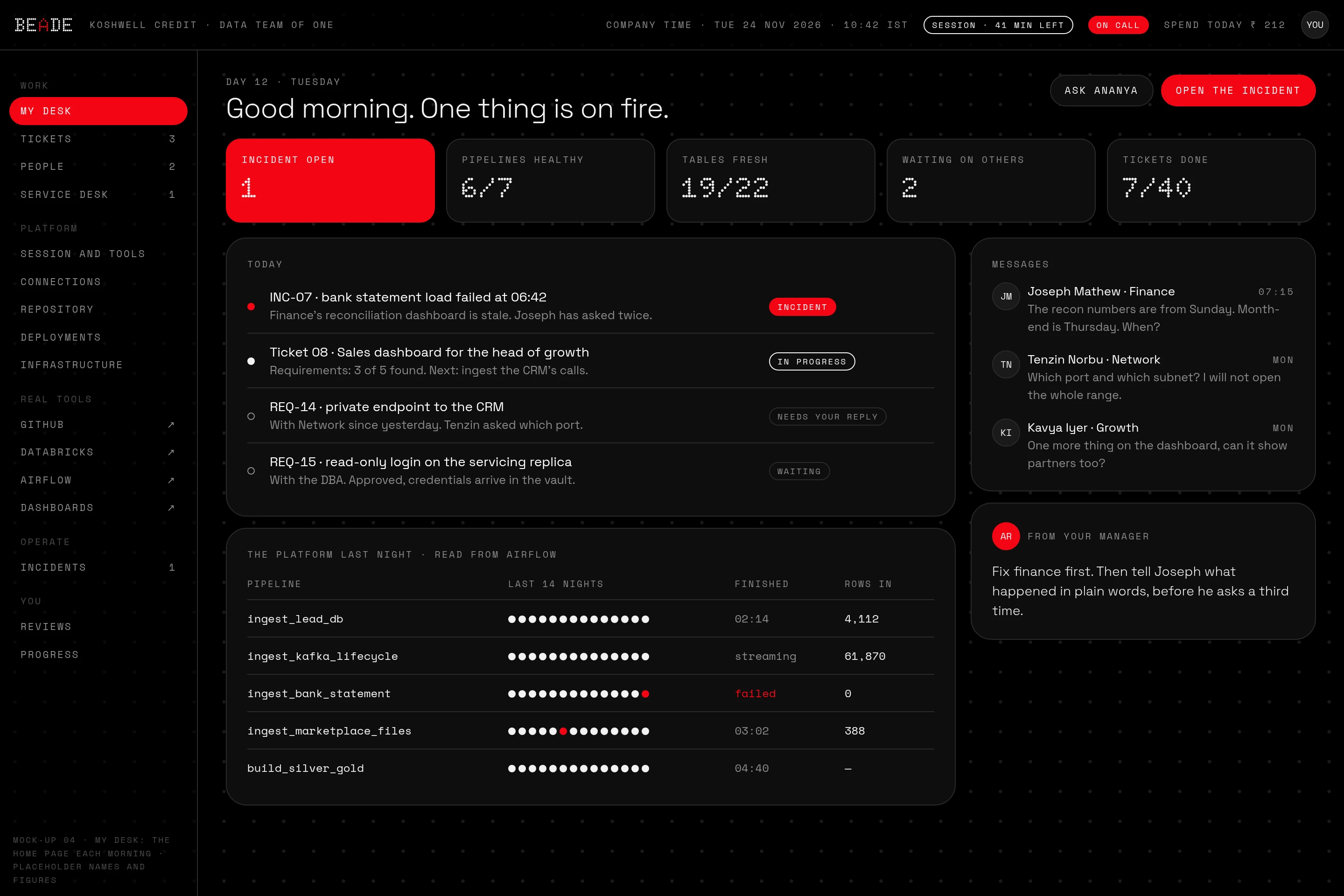
A design picture. The product is being built; names and figures are placeholders. Click any picture to open it full size.
Courses teach the syntax. The job is everything around it.
Nothing is reachable until you ask properly
Sources sit in separate networks. You request a route from Network and a login from the database administrator, and a careless request is sent back.
The ticket never says what they mean
“A sales dashboard” hides five decisions. The head of growth knows the answers and tells you only when you ask the right question.
Then the bank changes its file overnight
Files arrive twice, columns are renamed, a load fails at six in the morning and finance is waiting. You find it, fix it, backfill it and explain it.
From a vague request to a number someone trusts
A request arrives
A colleague asks for something in a sentence. The page lists what you still have to find out, and it fills in as people tell you.
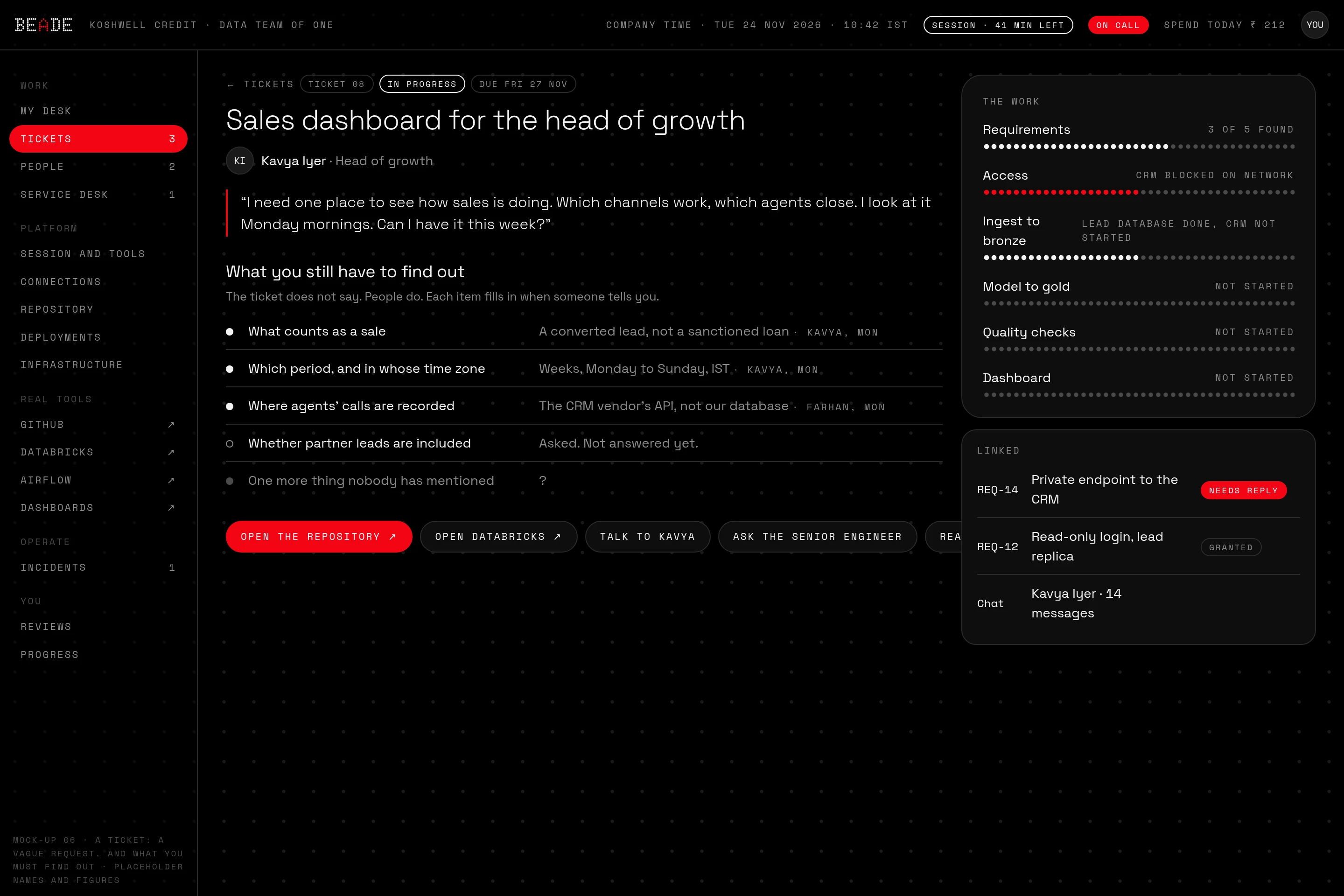
You talk to the people who know
Colleagues in growth, finance, risk, collections and compliance answer in their own words, check with others, and change their minds.
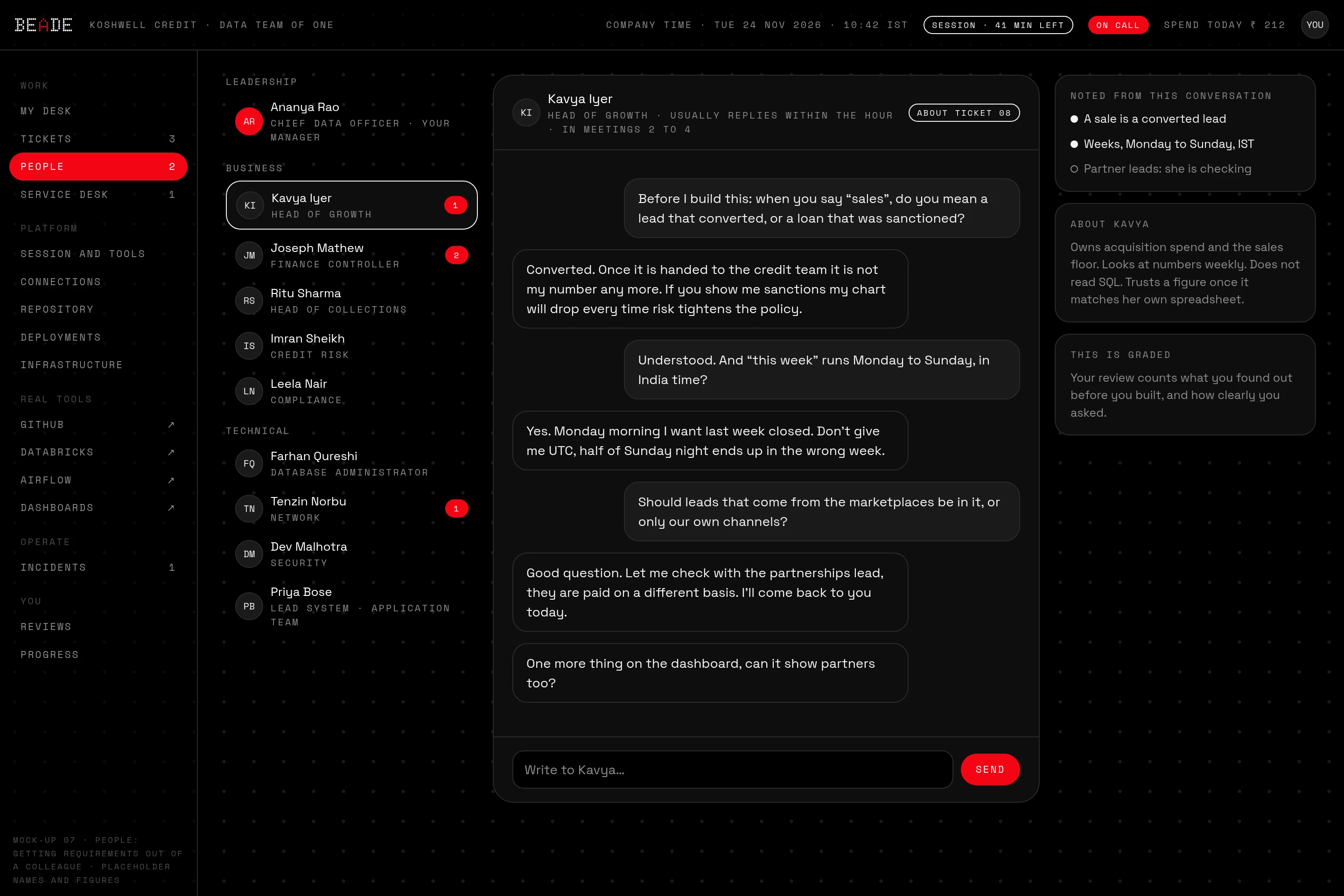
You get access the way a company grants it
A request for a private route to the sales system comes back: which port, which subnet, for how long. Ask for the least you need.
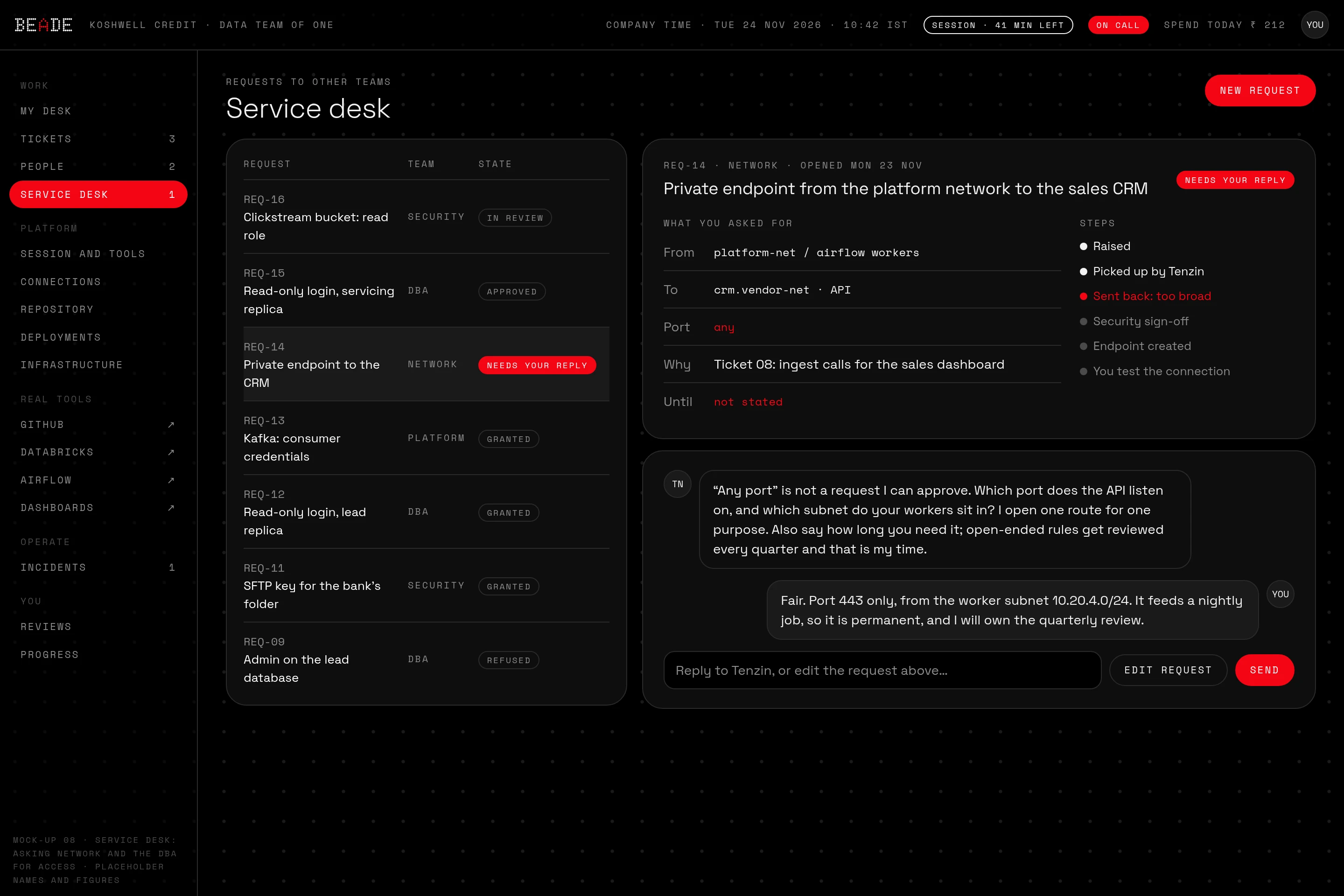
You build it in the real tools
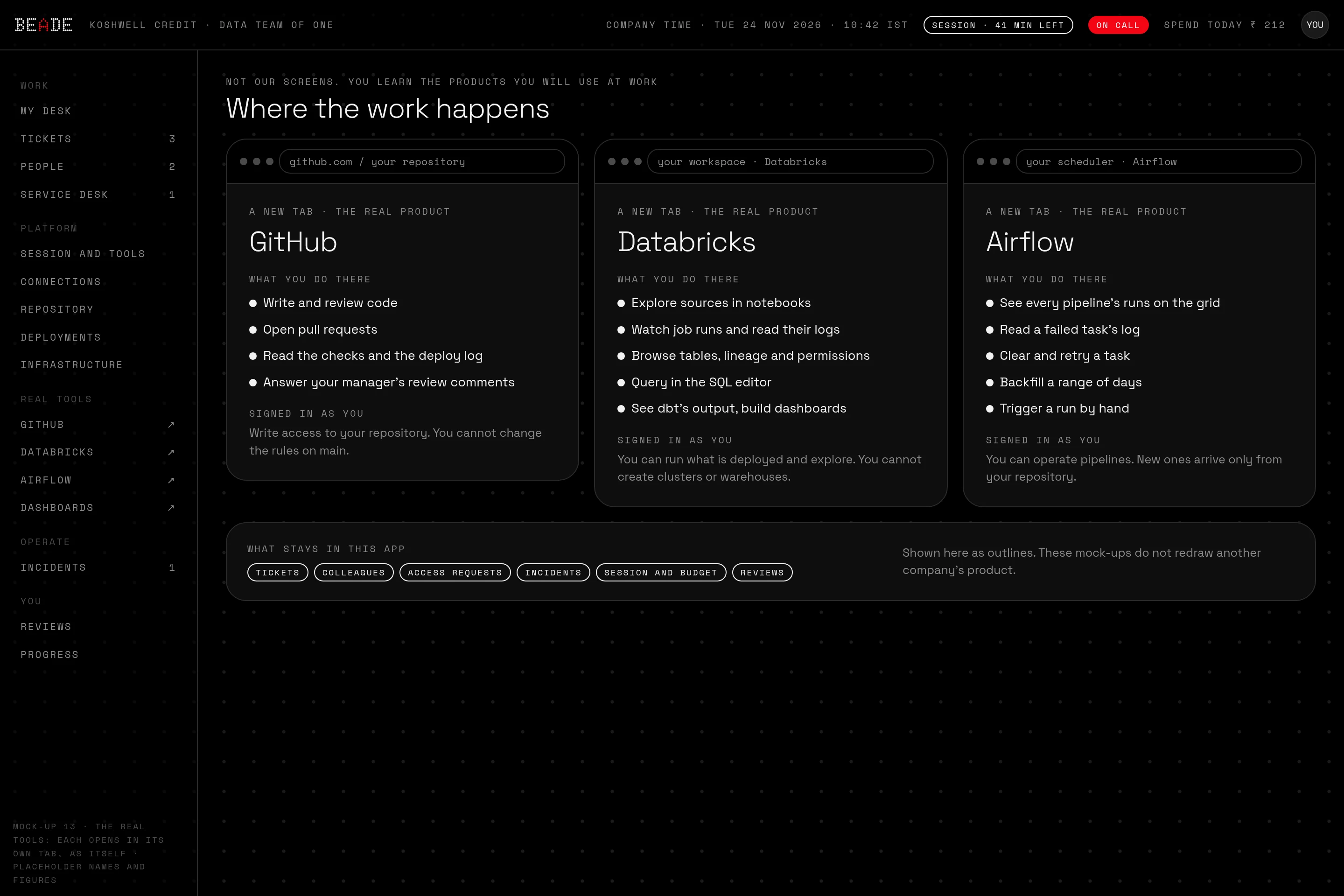
You get your own Databricks workspace, Airflow and a private GitHub repository, signed in and ready. You use their own screens, so nothing is new on your first day at work.
You ship by pull request
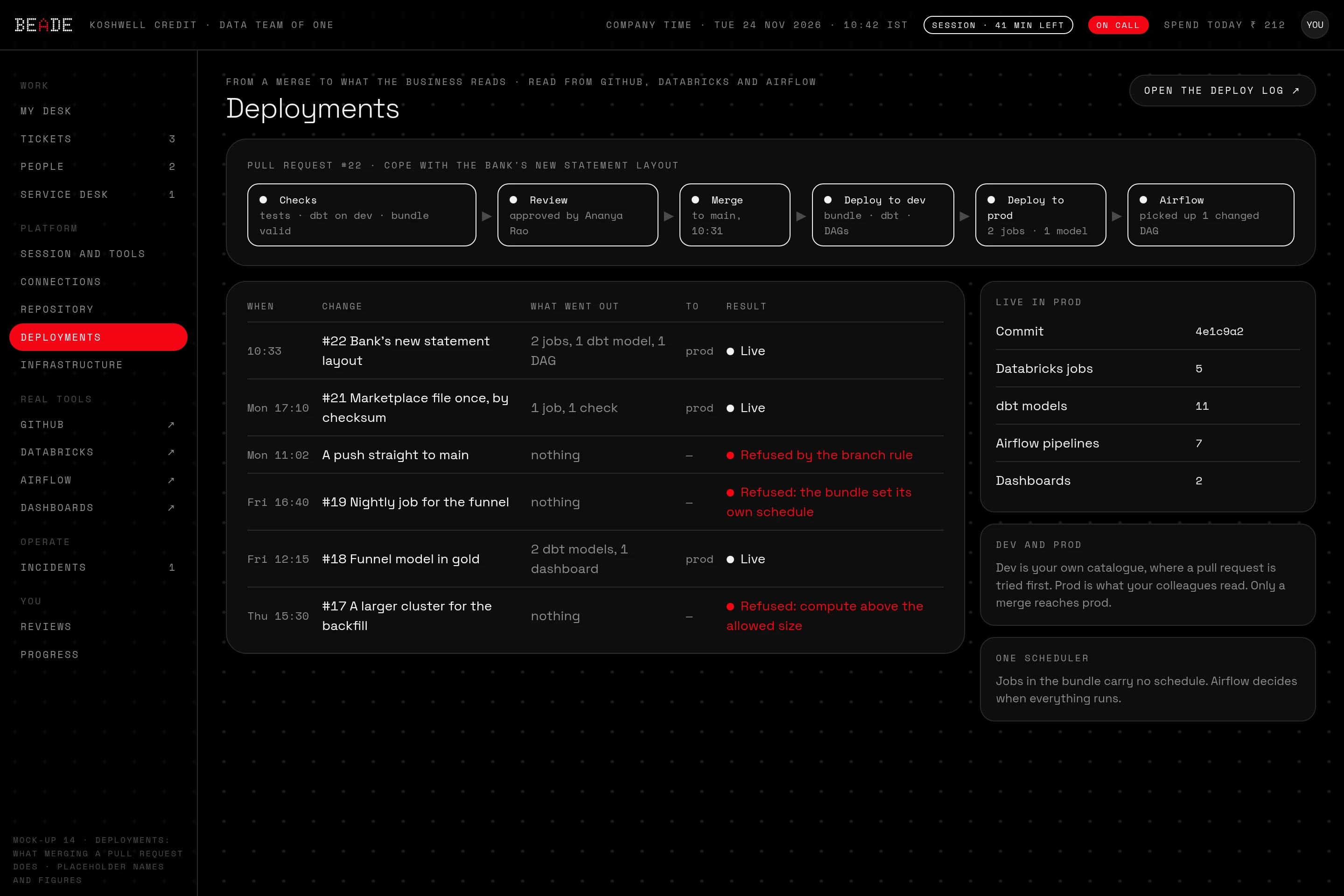
Your manager reviews the change, the checks run, and a merge deploys your jobs, dbt models and pipelines. A push straight to the main branch is refused.
It breaks, and you are on call
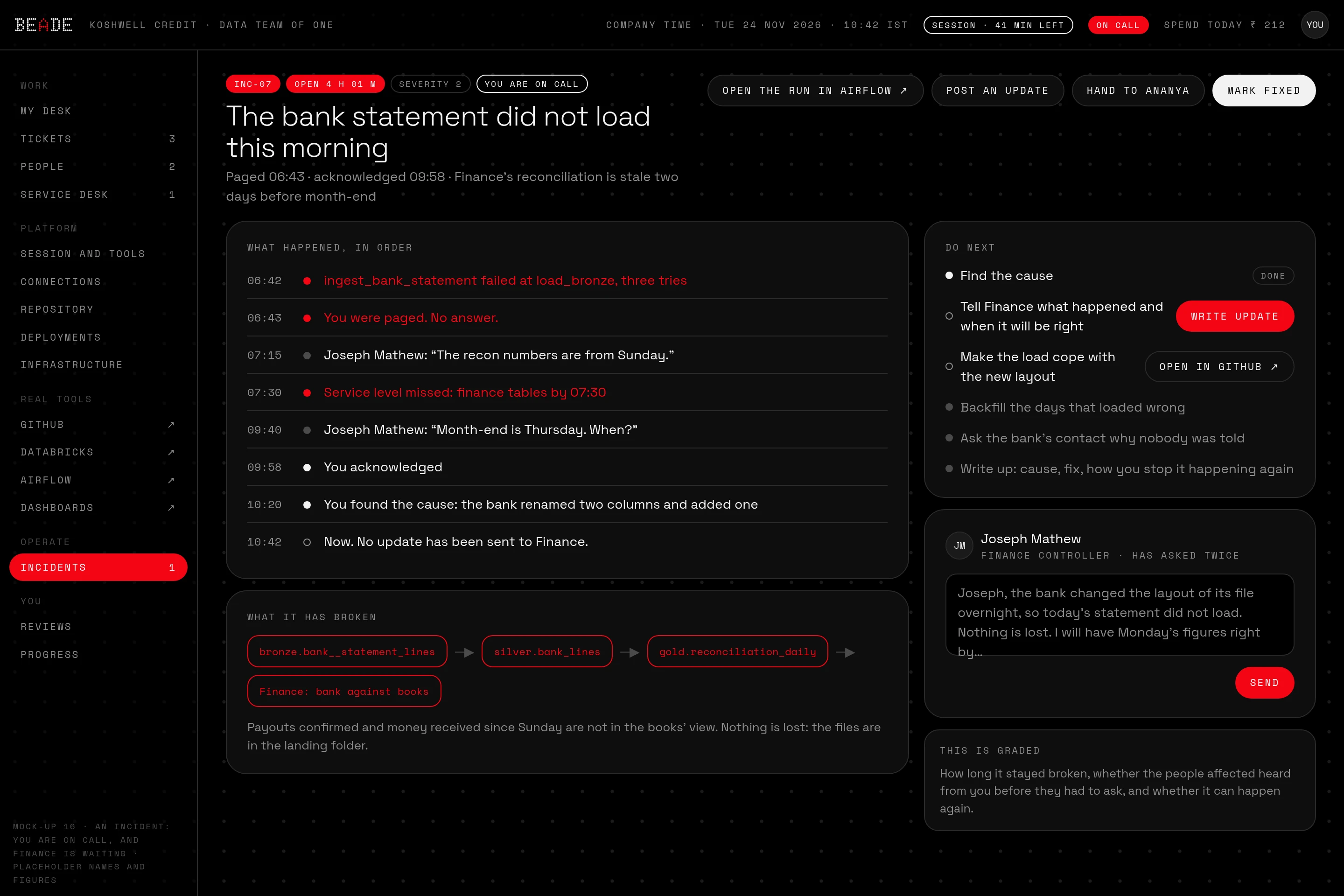
A load fails at six in the morning and finance is waiting. You find the cause, load the missed days again, and tell the people affected before they have to ask.
Your manager reviews it
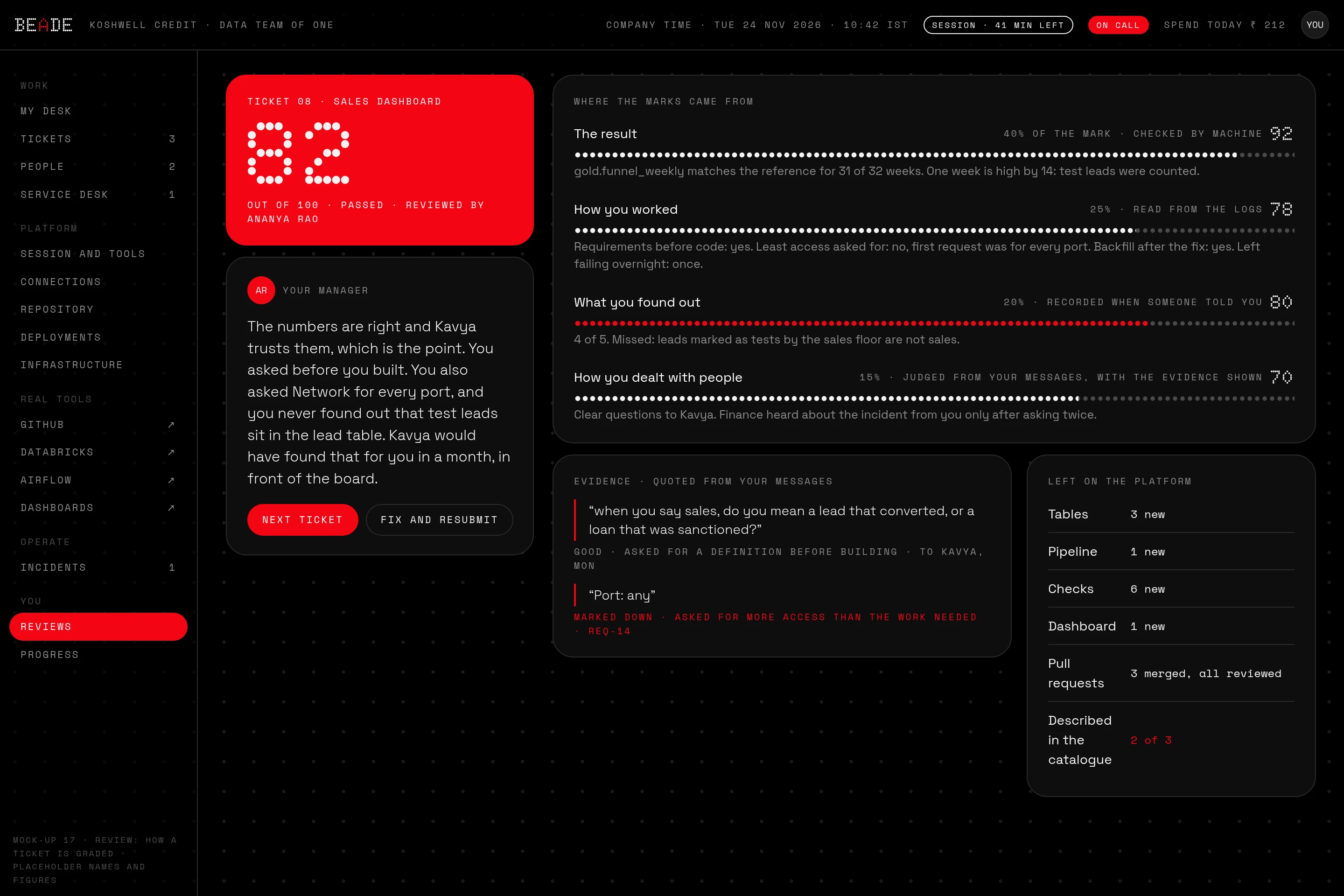
Marks for the result, for how you worked, for what you found out, and for how you dealt with people, each with the evidence shown.
Real tools. A simulated company.
The lender is simulated: its customers, loans, payments and colleagues are generated, so nobody's real data is involved. The tools are the real ones, in their own screens, and so are the problems. Your code lives in a private GitHub repository that is yours to keep.
Sources you connect to: operational databases, an event stream, files dropped by partners, a bank's daily statement, a sales system behind an API, and vendors' invoices.
One month, one fixed price, a platform that runs
Each ticket adds one new idea and one new tool at most. A senior engineer is there to ask, and asking never costs marks.
Find out what data exists
Meet the teams. Learn who owns what.
Run the pipeline left behind
A job, a run, a table. Your first win.
Change it by pull request
A branch, a review, a deployment.
Keep it up to date
Load only what changed, safely twice.
Run it every night
A schedule, a retry, a backfill.
Build the sales funnel
Models, tests, a table the business reads.
The file that arrived twice
Checks that catch bad data.
The morning it breaks
Your first incident, with finance waiting.
A record of work, not a certificate
The result
Are the numbers right? Checked by machine against what the company's systems actually did.
How you worked
Requirements before code, the least access needed, a backfill after the fix. Read from the logs.
What you found out
The requirements nobody wrote down, counted as colleagues tell you each one.
How you dealt with people
Clear questions, honest updates during an incident. Judged from your messages, with quotes.
Start free. Pay once for the first month.
The price below is not final; your choice here is how we will set it. Nothing is charged.
Work the company's data with SQL
- Real requests from the business, graded
- In the browser, nothing to install
- Tells you if you are ready for the rest
8 tickets, 20 lab hours included
- Your own Databricks, Airflow and repository
- Colleagues, a senior engineer, reviews
- One price. No bill by the hour
I want it, at a different price
- The same month
- Tell us what you would pay
- We read every answer
Twenty hours is more than the eight tickets need. If you like to explore, more hours can be added. Later months are sold the same way, each a new chapter at the company.
Be told when it opens
Five questions. The answers decide what gets built first and what it costs. Your email is used only to tell you when it opens.
No plan chosen yet
Is the data real?
No. The company and everyone in it are simulated, so no real person's data is involved. What is real is the tooling you use and the kind of trouble the data gives you: duplicates, late files, changed layouts, records that disagree between systems.
Do I need my own cloud account?
No. A Databricks workspace, Airflow and a private repository are set up for you; all you need is a GitHub account. The platform is started when you sit down and shut down when you stop.
Who is it for?
People aiming at a first data engineering job, and analysts and engineers moving into one. You should already write SQL with joins and aggregates and read basic Python. If you are not there yet, the free stage will tell you, and point you to where to learn first.
What if I get stuck?
You ask, as you would at work. A senior engineer explains ideas, shows a worked example and looks at your code, without writing the answer for you. Each ticket comes with a short piece of reading. Asking questions never lowers your mark.
Do I need to know lending?
No. On your first day a colleague explains how the company makes and loses money, and every term is one click from a plain definition.
When does it open?
It is being built now. The simulated company and a first set of tickets exist; the cloud platform and the colleagues are next. People on the waitlist hear first.
Will it get me a job?
Nobody can promise that. It gives you the experience interviews ask about, and a record of what you did with it.